
Cleanliness and Organisation
Make sure the room is clean and tidy before taking the photo. Avoid having too many distracting elements. Remember, less is more!
Lighting
Use natural light and avoid the flash. Open the curtains to let in daylight. Turn on interior lights such as lamps, etc.
Tripod or Stabilisation
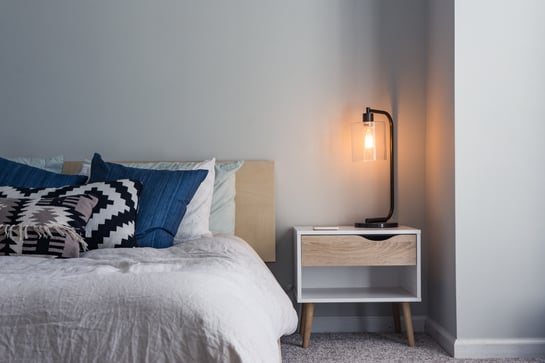
Use a tripod or stabilisation to avoid blurry photos, especially in low light environments. Try leaning on something for stability, such as a door frame or a corner of the room.
Selective Focus
Use the selective focus function to highlight specific elements.
HDR (High Dynamic Range)
Enable the HDR function to balance bright and dark areas in the image. But only if necessary.
Use the wide-angle camera
Most smartphones now have one, so make the most of it. With this camera, you can capture a larger area and it will help you photograph small spaces or an entire room. Keep in mind that the image may be distorted at the edges due to the optics.
Tips and tricks for interior photography
Composition
Just like in photography in general, there are several composition rules that you can apply to interior photography with your mobile phone to improve the visual quality of your images. Here are some important composition rules:
Rule of Thirds
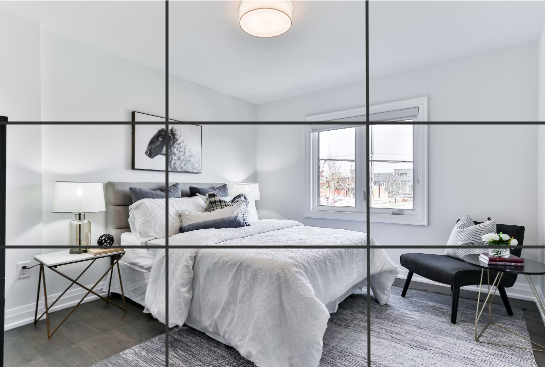
Divide the scene into a grid of nine equal parts using two horizontal and two vertical lines. Use the grid on your phone and place key elements at the intersection points to create a more balanced and attractive composition.
Perspective and Lines
Use natural lines in the architecture (such as walls, hallways, or furniture) to direct attention towards the focal point of the image.
Depth of Field
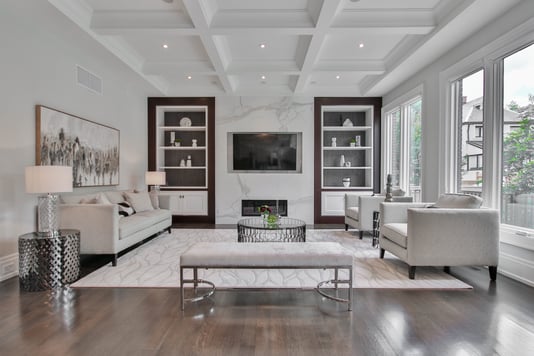
Use depth of field to highlight specific elements in the image. You can tap on your phone screen to focus on a specific area.
Wide Shots and Details
Combine wide shots that show the entire space with detailed shots that highlight specific elements of the interior.
Vanishing Points
The vanishing point is where two or more parallel lines (real or imaginary) converge to infinity in an image. Identify vanishing points in the architecture and use these lines to guide the viewer's gaze through the image. Along with the rule of thirds, you will achieve images that generate great interest.
Lighting and Shadow
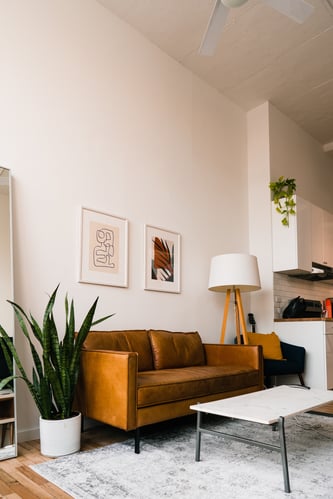
Take advantage of natural or artificial light strategically. Avoid harsh shadows and highlight well-lit areas to enhance the atmosphere of the image. For example, turn on the lights of bedside tables and room lamps. If the exterior is interesting, open the curtains.
In exterior photographs, it is interesting to show a facade with shadow and another illuminated in the frame. This contrast creates a volumetric effect that greatly favours the image.
The time of the photoshoot
It will depend on each establishment. Although generally in photography, the best times to take the shots are during the "golden hours". It is just before sunrise and sunset (around 30 minutes before). The shadows are softer than at midday. During the central hours of the day, it may be the time to take interior photographs.
If you want to take a photo from the outside, but the windows create a bothersome reflection, try taking it during these "golden hours". By balancing the light difference between the exterior and the interior, you can avoid these reflections.
Order and Organisation
Maintain visual order in the image. Remove distracting and disorderly elements that may detract from the main subject. An open toilet lid can ruin a wonderfully framed photograph.
Mirrors
Mirrors can be very helpful for composing an attractive photograph. Playing with the angle and position of the camera can achieve magnificent results.
But they can also cause problems. Who hasn't seen a real estate photograph in which the hand or the person taking the photo is reflected?
If there is no framing that avoids this situation, there is a trick that can help. Use a tripod or monopod and activate the countdown option for your mobile's shot. This way, you will have time to exit the frame and not appear in the photo. If the camera is too prominent in the result, it can be removed in post-processing.
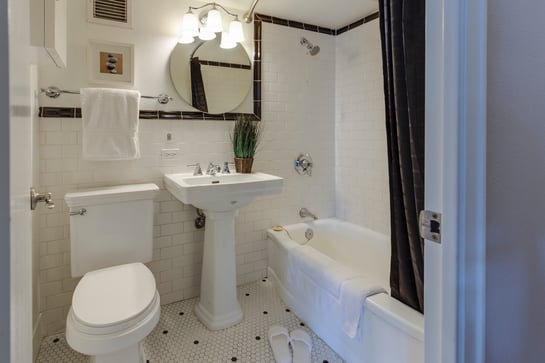
Where to take the photograph?
Firstly, use your mobile phone in a horizontal position. This is usually preferable for capturing the width and panorama of a setting, especially for websites and room presentations. Keeping the camera straight and aligned with the parallels in floor, ceiling, and architectural elements contributes to a more professional and aesthetically pleasing composition. Avoiding crooked lines is essential for achieving a polished finish.
Using the mobile phone vertically is only recommended for taking a panoramic photograph. Most mobile phones have this option, which allows for this type of photography through a horizontal sweep. Place the mobile phone on a tripod for stability and height.
The camera height is also important. Keeping the camera at eye level and at a right angle is often the most effective choice for conveying a natural feeling. If you manage to capture both the floor and the ceiling in the image, you will have achieved an exceptional result. To do this, position the camera at the midpoint between the floor and the ceiling, and ensure that all lines are straight and parallel.
To make the space look more spacious, we photograph from the corners. On the other hand, if the room is large and it's worth publishing several photographs of it, don't stick to just one angle. It's better to show different perspectives, of course, avoiding being reflected.
Common Mistakes to Avoid in Interior Photography
Avoid Excessive Digital Zoom
Physically approach the object instead of using digital zoom.
Avoid Using Filters
Refrain from using any type of filter. It may distort the reality of the photograph, and correcting it in post-processing will be challenging.
Do Not Use the Mobile Flash
For this type of photography, it is not very helpful. It may create strange shadows or reflections that could ruin the shot.
Try to Avoid Backlit Photos
It's not always possible, but try not to take the photograph with a light source directly facing the camera. For example, the room's window or a bright light bulb. If there's no other option, try activating the HDR option to compensate for the difference between light and shadow.
Avoid Placing the focal point in the centre of the image
Use the grid to position it near those lines.